What would the wood say?
I have carefully sourced the wood used for trees and other decor to be non-toxic, low-splinter, and locally acquired.
Sep 7, 2026
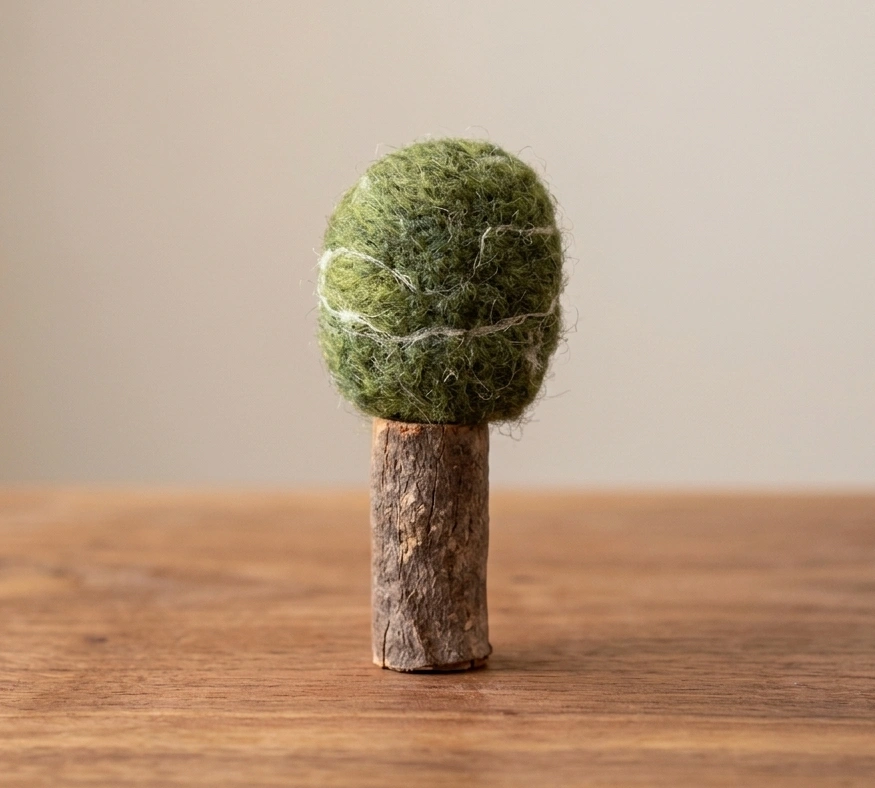
When first creating my little trees, I thought the easy part would be cutting lengths of wood for the trunk. But alas, they contribute well over half of the work in creating these felted forests.
First, I carefully source wood that is non-toxic, low-splinter, and naturally-fallen rather than cut down. My favourite is grey gum - also known as eucalyptus - as it often has beautiful straight branches and solid flat bark. My other choice is Olive wood, which although has less straight bits and rougher bark, provides a very low-splinter option with interesting knots and offshoots to work with.
I store these pieces away in a cool, dry area for 6-7 months, allowing natural drying that prevents rotting, dries saps and oils, and removes the bulk of any active lichens or insects. If required, pieces are heat treated as well.
Then, I cut them to length and sand to a flat sturdy surface, smoothing the edges of the bark down.
Lastly, the bottoms are oiled in natural food-grade oils, to prevent drying out and splintering/cracking.
The important bit to me is that the natural beauty of the wood is preserved. I like to showcase missing pieces of bark, lichens, knots, cracks, boreholes and offshoot stumps rather than hide them, as each of these tells the story of the tree they came from.
So when a felted tree drops into someone's little woolen world, it comes with its own story.